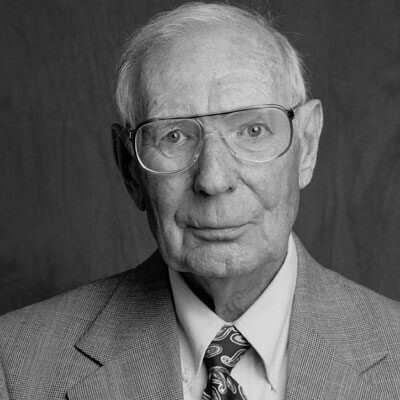
Interviewer: Generally, what I want to do is talk briefly about pre-camp. A little about your role—name, rank, serial number, so to speak.
Wallace Carden: And what I did.
Interviewer: Right, what you did. Then we’ll talk about what you knew before, how old you were—some basic information. You can tell me, you’re from what town?
Wallace Carden: I was from Briceville, Tennessee—near Oak Ridge.
Interviewer: So you’re not far from home now.
Wallace Carden: About nine miles.
Interviewer: You joined the military or were drafted?
Wallace Carden: Joined—March 9, 1943. Sent to Fort Sill, Oklahoma, for basic training: telephone systems, switchboards, and combat training for field artillery. That lasted 13 weeks. Then Camp Pickett, Virginia, for six months. After that we trained in amphibious operations, mountain climbing, then shipped overseas from Boston.
Interviewer: Did you know your destination?
Wallace Carden: No—just Europe somewhere.
Interviewer: Did you know you’d be liberating anybody?
Wallace Carden: We didn’t know what we were going to do—just that we’d be in the war.
Interviewer: What did you know about the plight of the Jewish people?
Wallace Carden: We had read a lot—knew they were slaughtering them in horrible ways.
Interviewer: You believed it?
Wallace Carden: Oh yes. I believed anything they said.
Interviewer: How old were you?
Wallace Carden: Nineteen when I went in—twenty in combat.
Interviewer: You were on the Atlantic?
Wallace Carden: Seven days in a terrible storm. Everyone was seasick. I ate two apples the entire week. We landed at Portsmouth, then trained in Wales six more months—mountain climbing, long marches in the rain. Later we moved to Cheltenham for maneuvers and mock combat.
Interviewer: When did you reach France?
Wallace Carden: July 27. We landed on Omaha Beach. First combat was near Saint-Lô. Planes bombed the wrong direction and tore up an entire division. My job was laying wire for telephone lines—sometimes miles of it—and operating switchboards. Our division liberated many towns, including Paris.
Interviewer: Did you talk to civilians?
Wallace Carden: Yes—one Catholic priest tried to show us mines and stepped on one. Killed instantly.
Interviewer: You liberated Paris?
Wallace Carden: Yes—28th Infantry Division. French civilians sang the German national anthem as we left; we told each other to get our carbines ready.
Interviewer: Where next?
Wallace Carden: Liberated Luxembourg, Brussels, many towns, then moved into the Hürtgen Forest. Brutal fighting. I operated the switchboard from a foxhole. Mortars wounded several men right in front of me.
Interviewer: Then the Battle of the Bulge?
Wallace Carden: Yes. We were in Luxembourg, near the town of Ouren. Three of us were left in a pillbox to maintain communications. On December 16, the Germans came down the road beside us—tanks, infantry, everything. We were nearly surrounded.
Interviewer: They didn’t blow up the pillbox?
Wallace Carden: No—they weren’t meeting resistance, so they ignored us. We stayed there until nightfall on the 17th.
Interviewer: What happened next?
Wallace Carden: We tried to get out. Met a colonel who said, “Every man for himself.” We reached our jeep—but three Germans stepped out with guns. Captured us. Held us in a house until 9 p.m.
Interviewer: December 17, 1944?
Wallace Carden: Yes. Then they moved us—tanks trying to run over us. They made us sleep in a lime pit. We knew we were POWs and had little chance.
Interviewer: They put you on a train?
Wallace Carden: Yes—40-and-8 cattle cars. No food or water for days. Americans bombed the train. One man in our car was shot by German guards afterward and died standing up. His body stayed in our car nearly a week.
Interviewer: How was your mental state?
Wallace Carden: I always believed I’d survive unless someone killed me. Others gave up—but not me.
Interviewer: You arrived at Bad Orb?
Wallace Carden: Yes—Stalag IX-B. One helmet of watery soup, one sixth of a loaf of bread per day. Freezing cold. Forced labor. Saw deer running free—we said, “That’s what freedom is.”
Interviewer: They inspected you looking for someone with a cut?
Wallace Carden: Yes—made us stand in the snow three hours. Found the man—he never returned. Likely shot.
Interviewer: You were selected for Berga?
Wallace Carden: Yes—they looked at dog tags. “H” for Hebrew; “P” for Protestant. They mis-wrote my name. Then shipped us to Berga—tunnel labor. People beaten constantly. We moved through 17 tunnels until the last one forced us to stay.
Interviewer: What month was this?
Wallace Carden: February 1945.
Interviewer: How was your health?
Wallace Carden: Weak—losing weight fast.
Interviewer: Did someone help you?
Wallace Carden: A civilian worker risked his life to bring us a spoon and a small knife.
Interviewer: How close were you to liberation?
Wallace Carden: Liberated April 23. Captured December 17—127 days total.
Interviewer: You described a displaced person who walked from Warsaw?
Wallace Carden: Yes—2,000 started; only 200 left. Germans shot the rest.
Interviewer: Then began the death march?
Wallace Carden: Yes—15 miles a day. Old guards could barely walk. Political prisoners shot along the road—hundreds. We ate raw potatoes when guards weren’t looking.
Interviewer: You reached Greiz?
Wallace Carden: Yes—a girl tried to give me bread; a guard hit me with a rifle butt. Townspeople cried seeing us. A farmer tried to take us in—Nazis refused.
Interviewer: How many of you were left?
Wallace Carden: Maybe 300 Americans—many had died.
Interviewer: Describe liberation.
Wallace Carden: We slept in a barn. Guards planned to kill us if Americans came. Instead—they fled in the night. At dawn, I saw U.S. half-tracks. I ran across a plowed field, falling three times, climbed aboard.
Interviewer: What happened then?
Wallace Carden: Americans fed me, wanted me to shoot Germans—I refused. A lieutenant sent me to a hospital. I weighed less than 80 pounds—down from 195.
Interviewer: Did you return home soon?
Wallace Carden: After six weeks in hospitals, regained weight, sent home September 1945.
Interviewer: When were you married?
Wallace Carden: 1947—to a girl I’d known since seventh grade.
Interviewer: What do you take from the experience?
Wallace Carden: They can do any group that way—not just Jews. I’m not anti-Jewish at all. But hatred is dangerous. Same as conflicts in other parts of the world.
Interviewer: How were you treated at home?
Wallace Carden: People didn’t believe me. Said I made it up—said maybe I hadn’t even been overseas. I just stopped telling them.
Interviewer: Anything you would tell young people?
Wallace Carden: I’d tell them exactly what I told you. Humanity hasn’t changed much since Adam and Eve—people still harm each other.
Interviewer: How do you deal with the memories?
Wallace Carden: I deal with them. But people don’t want to hear—they call it lies. Even some in my own family won’t watch the film about Berga.
Interviewer: Thank you, Mr. Carden. You’ve been wonderful.
Wallace Carden: Sorry I broke down a few times. First time that’s happened.
Interviewer: It’s all right. You were wonderful.