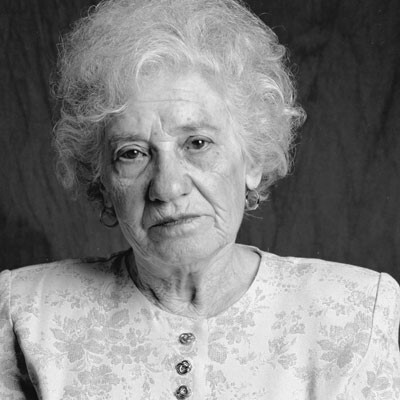
Interviewer: Tell me where you grew up. What country?
Ruth Diamond: Well, I grew up in Poland.
Interviewer: OK. How many brothers and sisters do you have?
Ruth Diamond: Two sisters and a brother.
Interviewer: So, there were four of you?
Ruth Diamond: Yeah.
Interviewer: What did your father do?
Ruth Diamond: My father was a…
Female: A grocery store owner?
Interviewer: He owned a grocery store?
Ruth Diamond: No. A furrier.
Interviewer: A furrier. OK. You had a happy childhood?
Ruth Diamond: Yeah.
Interviewer: What year were you born?
Ruth Diamond: 1956… 1956.
Interviewer: 1926.
Ruth Diamond: ’26.
Interviewer: So you were about 18 years old?
Ruth Diamond: 18. My husband is sick. He cannot talk.
Interviewer: OK. Would you like to take a break?
Ruth Diamond: No.
Female: He had a stroke.
Interviewer: He had a stroke. I understand you perfectly. Tell me about Helen.
Ruth Diamond: About Helen?
Interviewer: Your sister.
Ruth Diamond: Yeah. She survived with me.
Interviewer: She survived the war with you?
Ruth Diamond: Yeah, together.
Interviewer: She’s in Tokyo? You were both in camps together?
Ruth Diamond: Yeah, yeah.
Interviewer: Do you remember what camps you were in?
Ruth Diamond: I was in Blizyn… and I was in Bergen-Belsen. And I was in another camp.
Interviewer: You want to tell me a little bit about the camp?
Ruth Diamond: I worked in the camp.
Interviewer: You were working?
Female: Sewing.
Interviewer: You were sewing?
Ruth Diamond: No. It was a factory. Airplane parts.
Interviewer: You did airplane parts?
Ruth Diamond: Parts.
Interviewer: You and Helen together?
Ruth Diamond: Yeah.
Interviewer: Where were your parents?
Ruth Diamond: Lost.
Interviewer: And your other brother and sister?
Ruth Diamond: Lost.
Interviewer: Was Helen the only one who survived with you?
Ruth Diamond: Yeah.
Interviewer: Do you remember sewing uniforms?
Ruth Diamond: No. We were bleaching… they made things for the army.
Interviewer: How did you and Helen stay together?
Ruth Diamond: All the time. She was older.
Interviewer: Do you remember the day you were liberated?
Ruth Diamond: Yeah.
Interviewer: You were at Bergen-Belsen?
Ruth Diamond: Yeah.
Interviewer: And the soldiers came in?
Ruth Diamond: Yeah.
Interviewer: What happened?
Ruth Diamond: They opened the gate. We were happy.
Interviewer: Were you able to eat?
Ruth Diamond: Yeah.
Interviewer: Did you meet other survivors you remember?
Ruth Diamond: Survivors… yes.
Interviewer: Do you think Helen helped you survive?
Ruth Diamond: Yeah.
Interviewer: Did you pray or do anything to help you survive?
Ruth Diamond: No.
Interviewer: After liberation, where did you go?
Ruth Diamond: The American zone.
Interviewer: Did you need medical help?
Ruth Diamond: No.
Interviewer: Were you sent to a displaced persons camp?
Ruth Diamond: Yeah.
Interviewer: Where was that?
Ruth Diamond: (Unintelligible)
Interviewer: Did you stay there?
Ruth Diamond: Yeah.
Interviewer: Were you ever able to go back to Poland?
Ruth Diamond: No.
Interviewer: When did you know you’d never see your family again?
Ruth Diamond: In the beginning.
Interviewer: What country were you in after the war?
Ruth Diamond: Bialystok.
Interviewer: And how old were you?
Ruth Diamond: Twenty-one.
Interviewer: Did you live there two years?
Ruth Diamond: Two years.
Interviewer: Is that when you got married?
Ruth Diamond: Yeah.
Interviewer: And you moved to the United States?
Ruth Diamond: I had family here.
Interviewer: Did Helen come with you?
Ruth Diamond: Yeah.
Interviewer: You moved to Tennessee?
Ruth Diamond: Yeah.
Interviewer: Straight to Memphis?
Ruth Diamond: And stayed in Memphis.
Interviewer: Did you meet other survivors?
Ruth Diamond: Yeah.
Interviewer: Did you talk about what happened over the years?
Ruth Diamond: No. Couldn’t. Too painful.
Interviewer: You’re married to Karl?
Ruth Diamond: Fifty-five years.
Interviewer: And you had children?
Ruth Diamond: Yeah.
Interviewer: Three girls and a boy?
Ruth Diamond: Yeah.
Interviewer: Do they all live here?
Ruth Diamond: No. One daughter lives in Memphis. Others moved.
Interviewer: Did you ever tell your children about the war growing up?
Ruth Diamond: No. Never told them.
Interviewer: Did you ever tell Karl?
Ruth Diamond: No. Too painful.
Interviewer: Tell me about childhood in Bialystok.
Ruth Diamond: We had a nice house. I went to school. I was happy. My parents were happy. My father was a furrier. My mother stayed at home. We even had a maid.
Interviewer: Did your parents tell you anything about what was coming?
Ruth Diamond: No. Never.
Interviewer: You and Helen were sent together to camp. Do you know why?
Ruth Diamond: It just happened. They didn’t know we were sisters.
Interviewer: Do you remember the last day you saw your parents?
Ruth Diamond: When they separated us.
Interviewer: And that was the last time you saw them?
Ruth Diamond: (Unintelligible)
Interviewer: After liberation you met Karl. What was he like?
Ruth Diamond: Hardworking. A workaholic.
Interviewer: He was in charge of the displaced persons camp?
Ruth Diamond: Yeah. He helped me register.
Interviewer: And you were 22 when you married him?
Ruth Diamond: 22.
Interviewer: You moved to the U.S. because of family?
Ruth Diamond: Uh-huh.
Interviewer: What did Karl do?
Ruth Diamond: He owned Diamond’s Appliance Center.
Interviewer: You stayed home and raised four children.
Ruth Diamond: Four children.
Interviewer: Tell me about your grandchildren.
Ruth Diamond: I have seven. Three girls and four boys.
Interviewer: They’re all over the world?
Ruth Diamond: Yeah. I would like them here.
Interviewer: You have one here?
Ruth Diamond: Yeah. Just one.