
James Garner
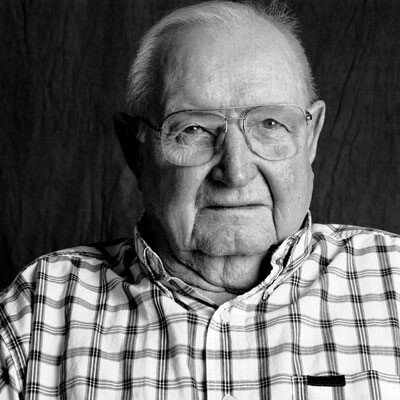
James Garner grew up poor but secure on a farm in Coffee County, Tennessee, the eldest of six children of a Baptist preacher. He volunteered for the Army in December 1940 because he felt it was his duty to serve his country, becoming the first volunteer from his county. Trained as a Military Police officer, Garner took part in the D-Day landings on Omaha Beach, where he was responsible for keeping vehicles moving off the beach under heavy fire. He lost men there and narrowly escaped being hit himself, with bullets passing through his jacket but not striking him.
From Normandy, Garner and his unit fought their way across France into Germany. He says he knew Hitler was trying to dominate the world but did not yet know what was happening to the Jews in the camps. Near the end of the war, he was ordered to advance on what turned out to be the Dachau concentration camp. After his men blew a hole in the wall to enter, he saw bodies being burned and encountered rail cars filled with the dead, sights he described as almost impossible to comprehend. The prisoners were in terrible condition but overjoyed to be freed.
After Dachau, Garner returned home to Tennessee, meeting his fifteen-month-old daughter for the first time. For many years he found it too painful to talk about the war, especially Dachau, but later he returned to Europe, visited Normandy again, and began speaking to students and others about what he had witnessed. Meeting survivors left him deeply moved and proud that he had done something worthwhile. When people questioned whether the Holocuast really happened, Garner insisted on the truth of what he saw with his own eyes.
Interviewer: When you were born… what year were you born?
Wife: 1917.
James Garner: 1917.
Interviewer: 1917. Where did you grow up?
James Garner: I grew up in Coffee County.
Interviewer: And where is that? In Tennessee?
James Garner: Yeah.
Interviewer: What city is that, is that near…?
James Garner: It's not a city. It's…
Wife: Manchester.
Interviewer: Oh, okay, Manchester.
James Garner: Yeah.
Interviewer: We actually have a gentleman coming in about half an hour. He's from Manchester.
James Garner: Okay.
Interviewer: Do you have any siblings? Brothers and sisters?
James Garner: Brothers and sisters, yes.
Interviewer: How many brothers and sisters?
Wife: There were six of you.
James Garner: Six of us.
Wife: He's the oldest.
James Garner: I'm the oldest.
Interviewer: You're the oldest? Oh, okay. And what did your father do?
James Garner: My father was a preacher.
Interviewer: Oh, okay.
James Garner: He pastored churches.
Interviewer: And in what church, do you remember?
James Garner: Well, they're a Baptist church.
Interviewer: Oh, Baptist church, okay. Okay. Did you know anything… well, let me back up. Tell me a little bit about growing up where you were.
James Garner: Well, when I grew up, we didn't have much, no money or nothing, but I grew up pretty well. I had plenty to eat.
Wife: He was in a farm.
Interviewer: Lived on a farm.
James Garner: On a farm.
Interviewer: So that did give you plenty to eat.
James Garner: Yeah.
Interviewer: Why did you enlist?
James Garner: I felt that it's my duty. This is a great country and I want to do something about it. And I did.
Wife: He was the first volunteer from Coffee County.
James Garner: Coffee County.
Wife: After that, they signed up.
Interviewer: You were the very first volunteer in your county to sign up for World War II.
James Garner: Yeah. And I've never regretted any of it. Of course, I've lost some men; you know, hit the beaches in Normandy and lost a lot of folks. But it's all been worthwhile.
Wife: He had been a year out at the college and then, they could teach with a year and so he was teaching at the time—
James Garner: Yes.
Wife: —that he volunteered. He helped sign up the people when they started their draft and got their numbers and all. So then he decided he'd volunteer.
James Garner: Yeah.
Wife: But he was teaching at that time. When he came back in the summers at the university. He came back in the summers to get more credits at the university and that's where we met.
James Garner: Yeah.
Wife: Over at MTSU, only it was State Teachers College then.
Interviewer: Before MTSU was even opened. When you enlisted, how long after were you sent to go overseas?
James Garner: Right away.
Wife: You didn't go right away. You enlisted December of 1940.
James Garner: Uh-huh.
Wife: And that was May in '41, and in '42, he had his commission as an officer and that's when we married.
Interviewer: You were in the Army?
James Garner: Yeah.
Interviewer: The Army?
James Garner: Military Police.
Interviewer: You were an MP.
James Garner: Yeah.
Interviewer: Pretty admirable job.
James Garner: What?
Interviewer: Very admirable job, very difficult job.
James Garner: Very tough but, well, and as I said, we liberated Dachau and that was a painful thing.
Interviewer: We're going to… we're going to talk about that.
James Garner: Okay.
Interviewer: When you got overseas, where was your first stop?
James Garner: Well, I was in England and we headed over that way in boats. And when we…
Interviewer: Do you remember what ship you were on?
James Garner: The ship that I was on, I wasn't on a ship. I was on just a, I don't know what you call it but…
Wife: It was a ship going over.
James Garner: Oh yeah.
Interviewer: I only say that because yesterday, we met a gentleman who came from England to the beaches of Normandy by ship and it was the Queen Elizabeth.
James Garner: Yeah.
Interviewer: And when you said that, I thought…
James Garner: Yeah.
Interviewer: It's interesting.
James Garner: That's right.
Wife: You stayed in England and in Ireland for a while.
James Garner: Yeah.
Wife: Before D-Day.
James Garner: Yeah.
Interviewer: Okay. Did you have any idea at that time going over what your mission was, what you were to do as a soldier?
James Garner: Well, what I was to do, I was just ready to do whatever they wanted me to do.
Interviewer: How did you feel at that time?
James Garner: Fine.
Interviewer: Fine, you felt good? So, you got there. Tell me about coming upon Dachau. Tell me about that time before that, where you were, what you were scheduled. Do you remember—
Wife: You could tell her about when you were landing on Normandy.
James Garner: Yeah. We landed on Normandy on the beaches.
Wife: Omaha.
James Garner: Omaha Beach which was a tough one. I lost a lot of men and when they dropped the thing, we went off on a jeep as we went all the way in that way and I lost fellows up there when it was happening.
Wife: You said when you were landing.
James Garner: What?
Wife: When you were still landing, you said you looked at one side and saw what?
James Garner: I saw one go down. I looked on the other side and the same is true.
Wife: And on the other side, what did you see?
James Garner: The same thing.
Wife: One blew up.
James Garner: That was quite an affair. I got all the way out on it and we surrounded the Germans somewhat and drove them off.
Wife: You had to keep the vehicles moving off of the beach.
James Garner: Yeah. Yeah, that was my job to see that vehicles get moving.
Interviewer: By this time, Mr. Garner, had you any clue what was happening in the rest of Eastern Europe?
James Garner: No. No, I was just a country boy over here and I don't know nothing about that. We didn't have… you know, we had newspapers and stuff but we heard things on the radio, but, no.
Interviewer: What had you heard? What did you know?
James Garner: I just knew that the war was going on over there and that Hitler was going to try to rule the world, so to speak, and I didn't want that to happen.
Interviewer: Did you have any idea what he was doing to the Jews?
James Garner: No, not at that time.
Interviewer: Not at that time. Tell me about how you got over to Germany and what happened there.
James Garner: Well, when I got into Germany, we were kind of winning.
Wife: You fought all the way through France.
James Garner: Yeah, went all the way through. Coming off the beach of Normandy, I had a little jacket on and there are holes shot in it. None of them ever touched me. Holes on both sides. But I lost the boys. And I had two drivers coming off the beach and one of them made it and the other didn't. It wasn't fun. It wasn't fun.
Interviewer: Tell me about coming up on Dachau.
James Garner: Well, I was going on through there and run into a place there somebody told me about, a railroad track down there and a lot of them were in there. You probably have seen the picture of them dead in the thing and I went down there and I just couldn't fathom it hardly.
Interviewer: What did you know when you were going into Dachau? What had you thought it was? What did they tell you it was?
James Garner: They didn't.
Interviewer: So, you came in just to check things out?
James Garner: Well…
Wife: But you had orders to…
James Garner: Yeah, orders to…
Interviewer: You had orders to go in.
James Garner: Yeah, yeah.
Interviewer: Did they tell you they were POWs or inmates or people of any kind?
James Garner: They didn't know it even.
Interviewer: They just ordered you to go in and look around and see what it was?
James Garner: Yeah.
Interviewer: What was the first thing you remember seeing?
Wife: You had to blow a hole in the wall, didn't you?
James Garner: Yeah, had to blow a hole in the wall to get through, and the first thing I saw there, they were burning the people, putting them in the fire and burning them. And that was quite rough with my men.
Interviewer: What else do you remember?
James Garner: Well, I remember we just had to keep moving. We just didn't dare to stop. We just zoomed. We just had to keep on going.
Interviewer: When did you realize that this was actually a death camp that you had come onto?
James Garner: When I got there.
Interviewer: When you got there and you saw them going into the ovens.
James Garner: Yeah.
Interviewer: Did you know that they were Jews?
James Garner: No, I didn't know at that time. I didn't know they were.
Interviewer: Did you meet any of the inmates? Had you talked to any of them?
James Garner: Oh yeah. After the war, back home here, they had me over, you know…
Wife: At the university here.
James Garner: What?
Wife: At the university. You met Shay.
James Garner: Yeah. Lionel Shay.
Interviewer: While you were there at Dachau, do you remember talking to anybody? Any of the inmates?
James Garner: No, they were just so relieved to get out of there and some of the fellows started feeding them. They hadn't had anything to eat. They were in terrible shape and I wouldn't do it. And when I was back home after that the fellows said it killed them. They hadn't had anything for so long. But I had saved the ones that I wouldn't feed.
Wife: I think they overfed them, didn't they?
James Garner: Yeah.
Wife: That's why they died.
Interviewer: So, that's why you didn't feed them?
James Garner: What?
Interviewer: That's why you didn't feed them?
James Garner: Yeah, yeah. It killed them.
Interviewer: Do you remember any of the inmates?
James Garner: No, not really.
Interviewer: Do you remember what you and your other soldiers had talked about when you saw them?
James Garner: Well, we were just so startled. We just couldn't believe what we were seeing. It was just absolutely unbelievable what we were seeing.
Interviewer: How long were you there?
James Garner: I don't know. We kept moving through that particular place.
Interviewer: You said they were happy to see you.
James Garner: Oh, yes.
Interviewer: Tell me about that. How were they doing?
James Garner: Well, they were inside there, and we tore down the fences and so we got them out of there and shot the man that was guarding on top. We shot him off.
Interviewer: You killed them?
James Garner: Oh yes.
Interviewer: Killed the guards.
James Garner: Yeah, and so that's the way we got them out of there and they were just so excited about it and just like I said, the ones that ate so much died and I wouldn't feed them and they were so upset with me in the beginning but they realized it later that that's what happened. I saved their lives.
Interviewer: How do you feel about that?
James Garner: What?
Interviewer: How do you feel about that?
James Garner: I feel that it's important, that I'd done something worthwhile and that was a really rough situation there for a while.
Interviewer: Tell me real quick, do you remember what division you were in, like unit?
James Garner: I was military police. That's all I remember.
Interviewer: Okay, military police with the Army.
James Garner: Yeah.
Interviewer: Do you remember what company?
Wife: You were with headquarters, aren't you?
James Garner: What?
Wife: You were with headquarters at that time.
James Garner: Yeah, headquarters.
Interviewer: Headquarters.
James Garner: Yeah.
Interviewer: Okay.
Wife: He was a captain under General Hayslip.
James Garner: Yeah.
Interviewer: You were a captain?
James Garner: Uh-huh.
Interviewer: Okay. You left Dachau. Tell me about that.
James Garner: What? When I left?
Interviewer: After you left Dachau, tell me a little bit about that.
James Garner: We just kept moving. We're going after.
Interviewer: Had you radioed?
James Garner: What?
Interviewer: Had you told… had you informed anybody that the inmates at Dachau were going to need help and…?
James Garner: No.
Interviewer: How… do you remember how you alerted other people about the inmates?
James Garner: Well, I just told them about it. And that's about all I know.
Wife: I guess you had radio or something, didn't you?
James Garner: Yeah, I had a radio and all that sort of thing.
Wife: You had to leave some of the men there and…
James Garner: What?
Wife: Some of them stayed there and stuff.
James Garner: Yeah.
Wife: So, and then you went on.
James Garner: Yeah.
Wife: Yeah, the war wasn't quite over.
Interviewer: You left Dachau. Where did you go from there?
James Garner: Just straight ahead.
Wife: Yeah, you went to Austria from Germany.
James Garner: What?
Wife: You went to Austria from Germany, didn't you?
James Garner: Yeah, yeah. Austria.
Interviewer: Austria?
James Garner: Yeah.
Interviewer: How long were you in the service after you left Dachau?
James Garner: A long time.
Interviewer: Here, let me help. How long were you in the service total?
Wife: Five and a half years.
James Garner: Yeah.
Interviewer: Five and a half years and you enlisted in what year?
Wife: December of ’40.
Interviewer: December of ’40 and you had liberated Dachau…
James Garner: Uh-huh.
Wife: In ’45.
Interviewer: ’44, ’45?
James Garner: Uh-huh.
Interviewer: Okay. So, you were in the service for a few months after you left Dachau.
James Garner: Yeah.
Interviewer: You came back home after that? You came back to Tennessee after that?
James Garner: Yeah.
Wife: He came back to see his little daughter he had never seen. She was fifteen months old.
James Garner: Fifteen months old. I'd never seen her.
Interviewer: So, she was born while you were overseas.
Wife: Uh-huh.
James Garner: Uh-huh.
Interviewer: So, you got to see your fifteen-month-old daughter.
James Garner: Yeah.
Interviewer: I bet that was something.
James Garner: It was. I've had quite a career and then the whole world has been good to me.
Interviewer: Tell me, when you came back, do you remember telling your wife about what you saw at Dachau?
James Garner: Oh, yeah. Yeah.
Wife: He didn't talk too much about the war for a long time.
James Garner: No, I couldn't. We went back after, later on, and went to the beaches and so forth and I sat there and cried. Then I was able to come home and tell the people about it. I'd go to schools, things like that, and tell about the problems that we'd seen and all that.
Wife: He went back to school after he came home. He got a degree in pharmacy.
James Garner: Yeah.
Interviewer: You became a pharmacist.
James Garner: Uh-huh. Yeah. And I regretted that.
Interviewer: When you look back on that day in Dachau, what do you remember the most?
James Garner: I remember the horror of it, the… about it. That was something. Of course, over here, I met some of those people who had come to the United States and all those people.
Interviewer: When you met the survivors, what was that like?
James Garner: They were excited and so was I.
Interviewer: We met a survivor who calls the day that you came into Dachau his second birthday, the birth of his freedom.
James Garner: Yeah.
Interviewer: When you hear that, how does that make you feel, knowing that you brought that to them?
James Garner: It makes me feel good. It makes me feel very good. Even now.
Interviewer: After seeing what they had gone through, some of them were there for years and the conditions that they lived in, do you understand even a little bit how important that day was that you got there?
James Garner: Yeah, I do. I do. And over here, many of those people come to the United States and I met with them.
Wife: When Shay was here at the university, well, he met him, he was out there looking at the displays and he couldn't find many on Dachau and Shay was standing close, and he took him over there where it was. He was telling him he liberated it and he sat down and talked to him and said, “Did you remember the—” He was telling him where they blew up the— “Do you remember the bridge?” And he couldn't think for a minute about a bridge and he thought of a little platform that was over a little stream. So he told him that… Then he practically picked him up and hugged him and said, “I was in line to go in next to be…” whatever, they gassed.
Interviewer: You rescued a lot of people there.
James Garner: What?
Interviewer: You rescued a lot of people.
James Garner: Yeah. Yes.
Interviewer: Is there anything you'd like to add?
James Garner: Well, sometimes, it's hard to talk about it. I couldn't for a long time. But one thing I'm glad I did was do it. Do it.
Interviewer: How many children do you have?
Wife: We have three, a boy and two girls.
Interviewer: A boy and two girls.
James Garner: Yeah.
Interviewer: You have grandchildren.
Wife: Seven.
James Garner: He's a doctor here.
Interviewer: Seven grandchildren.
Wife: Our son is a doctor here in town.
Interviewer: Oh!
Wife: One daughter lives in Louisville and one in Indianapolis.
Interviewer: You have seven grandchildren.
Wife: Seven grandchildren.
Interviewer: That must be fun.
James Garner: Yeah.
Wife: The youngest one we have though is nineteen. They're not little anymore.
Interviewer: Oh. You have great grandchildren now?
Wife: I don't have any yet.
Interviewer: Oh.
Wife: Just two of them are married.
Interviewer: They'll be coming. You're looking forward to the holidays?
James Garner: Yeah.
Wife: We've just been here about seven months. We decided that we… I couldn't cope with both of us.
Interviewer: Sure.
Wife: And so we really like it here.
Interviewer: It's a very nice place.
Wife: We have a home here and we enjoy it. We have two large rooms. We enjoy it.
Male: When you came back, did you meet people who didn't believe what you have been through or, you know, how do you deal with that?
James Garner: There were some who didn't and boy, I dealt with it strongly. I really let 'em have it.
Wife: And he was an eye witness.
James Garner: I was there. I saw it.
Male: Could you understand?
James Garner: What?
Male: Could you understand why someone wouldn't believe?
James Garner: No. I never understood that. I still don't.
Male: What would you say to someone who hasn't experienced what you had and can't imagine it?
James Garner: Well, there wasn't much I could say to him really. They weren't going to listen.
Interviewer: Thank you.
James Garner: Okay.
Interviewer: It was an honor to hear your story. It's an honor to be with you.
James Garner: Thank you.