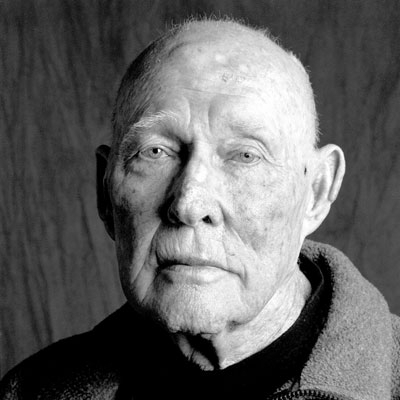
Interviewer: This is Mr. Harry Snodgrass from Mount Juliet, Tennessee. I’m Bob Eisenstein. Harry is going to tell us about his experiences in World War II in the concentration camp. So, Harry, you just go ahead and say what you want.
Harry Snodgrass: Well, sure. I’ll just start when I went into the camp.
Interviewer: Sure.
Harry Snodgrass: Well, it was about this time of year in ’45—I can’t remember the dates. It was in May though, because it was a few days after that that I think the war ended. I was driving this officer—Lieutenant Gant—and we didn’t know what it was we were going into. I had never heard the term “concentration camp.” When we got there, I had never seen anything like it in my life, and I’ve never seen anything like it since. I’d seen hundreds of soldiers who had died in battle, but these people had been starved to death. I could pick up a grown man in each hand and walk with him. They weighed maybe 50 or 60 pounds. Some people were lying on the ground and you couldn’t tell if they were alive. You’d have to kneel down to see if they were breathing. There was nothing we could do for them. That’s why I’m here today—to tell what I saw.
Harry Snodgrass: I remember going into the barracks. It reminded me of a potato bin—wooden slats stacked with four or five people sleeping on each tier. There were old buckets with green-looking pea soup in them and black bread. One man—he wasn’t Jewish; maybe Lithuanian—told us, “That’s what we eat.” He seemed healthier than the rest, so he couldn’t have been there long. He took us to a building like a horse arena with a dirt floor and said, “This is where they kill people at night.” I asked why the walls weren’t full of bullet holes. He said, “That’s not how they done it. They had them kneel down and shot them in the back of the head.”
Harry Snodgrass: I was 22 years old. You don’t think much at that age, but as I’ve gotten older, I’ve reflected on it more. The American Army tried to feed the prisoners, but their stomachs had shrunk so badly they couldn’t eat. They had to start feeding them like babies, I suppose. Some were taken away in trucks. I’ve never laughed at a Jewish joke since that day. Their only “crime” was being born Jewish. None of us get to choose what we’re born. They were killed simply because of who they were.
Harry Snodgrass: I remember standing next to a man looking at the bodies. He said, “I don’t believe there’s a God in heaven. If there was, he wouldn’t let this happen.” I had gone to church all my life, but I had no answer. I was just as shocked as he was. There were no Germans left in the camp—they had all run off. Two SS soldiers remained. They had been beaten and hung by the strongest prisoners. You could still see the rope marks on their necks. They had pajama bottoms on, and the SS lightning-bolt tattoos on their chests.
Interviewer: What was your first impression when you walked into the camp? What hit you right away?
Harry Snodgrass: I said, “My God, what has happened here?” I couldn’t imagine all those people stacked up, starved to death.
Interviewer: Did you see the ovens?
Harry Snodgrass: Yes. Some of my pictures show the ovens, where they rolled people in on rails like railroad tracks.
Interviewer: Did prisoners wear the striped uniforms?
Harry Snodgrass: Yes.
Interviewer: With the bullseye on the back?
Harry Snodgrass: I don’t remember the bullseye, but I remember the stripes.
Interviewer: Were you shown mass graves?
Harry Snodgrass: No.
Interviewer: Railroad cars? Cattle cars?
Harry Snodgrass: No, sir. I don’t recall seeing them. I wasn’t looking for anything—I was only there maybe an hour.
Interviewer: What camp was it?
Harry Snodgrass: Buchenwald. Near Weimar, Germany.
Interviewer: Did the camp have walls or barbed wire?
Harry Snodgrass: Barbed wire, I think—not real high. I didn’t see women or children; maybe they were kept elsewhere. There were political prisoners too.
Interviewer: Did it affect your thinking when you came home?
Harry Snodgrass: Yes. I compared it to how the Japanese treated American POWs—starving and beating them. What amazed me was how Germany, known as an intelligent and cultural nation, could do this. Ordinary people were convinced they were doing something great for Hitler. That’s what scares me.
Interviewer: How did you happen to go to the camp? Were you directed?
Harry Snodgrass: We just happened on it. We drove in by chance. It couldn’t have been long after liberation, because the bodies and prisoners were still there.
Interviewer: This left a lasting impression?
Harry Snodgrass: Oh yes. I can see why some people want to deny it—it’s so horrible. If I hadn’t seen it myself, I might doubt it too. But I did see it. I’ve told people, and they ask, “How could you stand it?” All I did was look at them—those people had lived it.
Harry Snodgrass: I later read that the Jews financed their own extermination—that the Germans used stolen Jewish property and money to run the camps. I had never thought of that. It’s frightening how many people today say it didn’t happen. When my generation and yours are gone, there won’t be any eyewitnesses left. I felt I had to speak because that day I couldn’t do anything for those people. At least I can do this much.
Interviewer: Tell us about this picture.
Harry Snodgrass: This is a pile of ashes from the crematory. We were told they spread it on the fields as fertilizer.
Interviewer: How many furnaces did you see?
Harry Snodgrass: I think maybe five or six.
Interviewer: Tell me about the barracks.
Harry Snodgrass: Two tiers of wooden bunks—like potato bins—four-by-eight or six-by-eight, blankets, partitions. Rows and rows of them. No comfort. If you’re starving someone, you don’t care if they’re cold.
Interviewer: Any bathroom facilities?
Harry Snodgrass: I don’t remember any.
Interviewer: When did you return home?
Harry Snodgrass: 1945. We came home from Le Havre, France on a Victory ship—1,500 men, 13 days back to the U.S.
Interviewer: Tell me about this picture.
Harry Snodgrass: These bodies weren’t near the furnaces. Most looked starved, not shot. Some had tattered clothes; some none.
Interviewer: Any odor?
Harry Snodgrass: Not much. It was cool weather, and they were so starved they had little flesh to decay.
Interviewer: How long had they been dead?
Harry Snodgrass: Maybe a couple of days. Hard to know.
Interviewer: Tell me about the crematory picture.
Harry Snodgrass: It shows the furnace door, the rails, and the bones still inside.
Interviewer: And this picture?
Harry Snodgrass: That’s a pile of bodies, and an SS soldier wearing only pajama bottoms. The SS lightning-bolt tattoo identified them. The prisoners had beaten and hanged them the day Americans arrived.
Interviewer: Were these bodies decomposed?
Harry Snodgrass: No.
Interviewer: Tell me about this next picture.
Harry Snodgrass: These bodies were like skeletons. Clothes had been removed—probably to reuse. They looked thrown there like cordwood.
Interviewer: Any odor?
Harry Snodgrass: Not much.
Interviewer: How old were you then?
Harry Snodgrass: Twenty-three when discharged. Three years in service.
Interviewer: Anything you want to add?
Harry Snodgrass: People should be judged by what kind of person they are—not their nationality. We have no choice how we’re born, but we do have a choice in the kind of person we become.
Interviewer: How do you feel about Germany reunifying?
Harry Snodgrass: Mixed feelings. I remember an article from 1939 saying wherever a German puts his foot, that is German soil to him. I’ve never forgotten that.
Interviewer: Have you been back?
Harry Snodgrass: In 1984, for the 40th anniversary of Normandy. The British treated us wonderfully—honored us.
Interviewer: Anything about Omaha Beach?
Harry Snodgrass: I wasn’t in the first wave. Things had calmed some by the time I arrived. But I know the boys who went in on D-Day—the 116th Regiment—bore the brunt of it. Twenty-three boys from one small Virginia town were killed that morning.
Interviewer: Did you meet Ernie Pyle?
Harry Snodgrass: Yes, on LST 392. He praised the infantry—said they lived, fought, and died like animals. He wrote so people at home would know what their sons were going through. He said the boys who left home were not the same boys who came back—they became hardened killers, because that’s what war demands.
Interviewer: I think that’ll do it.