-
Title
-
Hattie Cotton Elementary
-
Alternative Title
-
Hattie Cotton Elementary
-
Identifier
-
A small Nashville School found itself in the middle of one of America's darkest hours.
-
Creator
-
Matt Lewis
-
Type
-
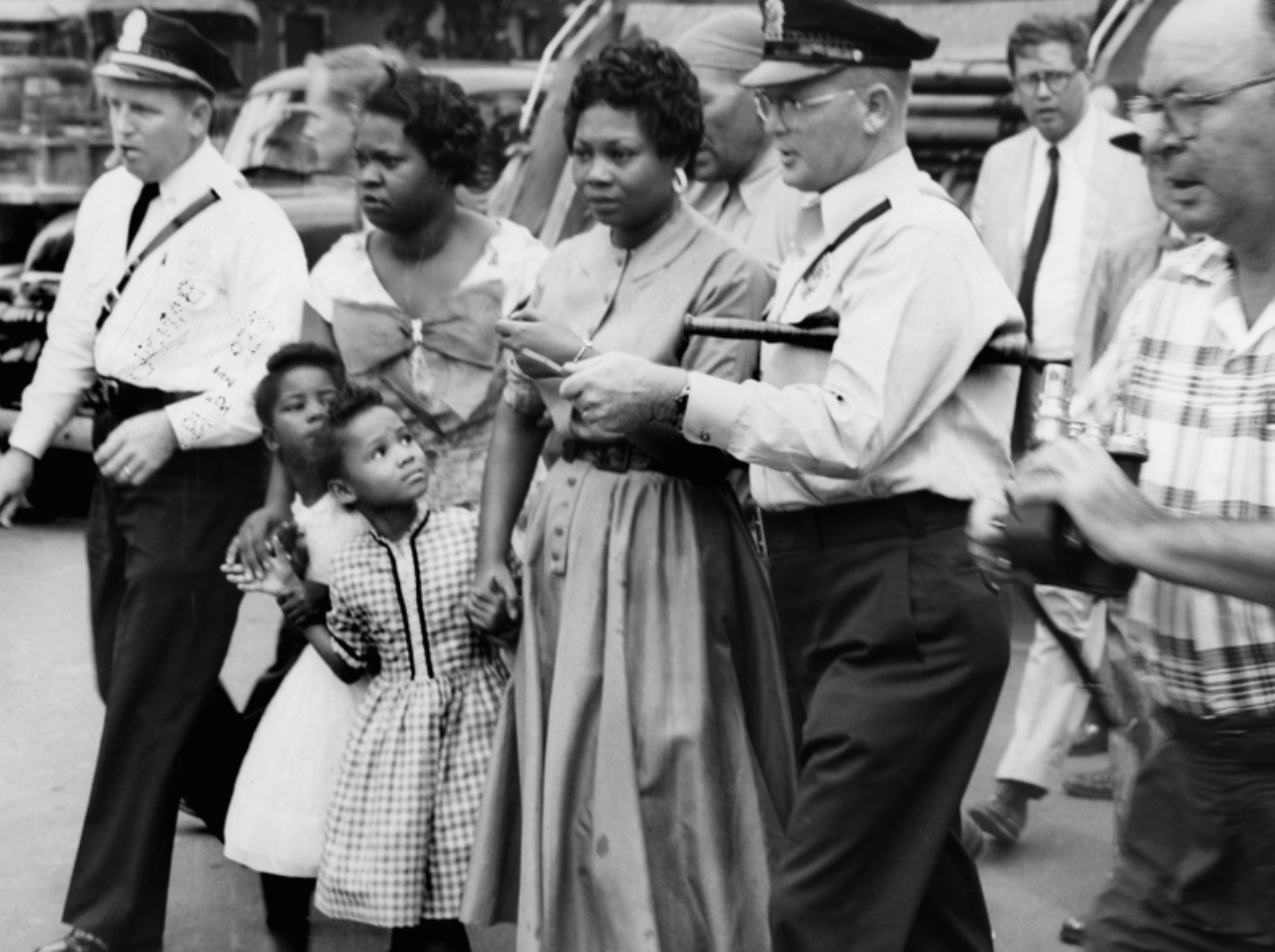
Hattie Cotton Elementary School was built in 1950 and found itself in the middle of the Civil Rights movement only a few years later. In 1957, in response to the Civil Rights Movement and the Supreme Court decision in Brown vs. the Board of Education, Nashville Public Schools introduced a “stair step plan” in which schools would gradually integrate its schools. The plan would start with the first grade, adding another grade each year until all grades became fully integrated. This was not well received by people who felt schools should be separated by skin color, specifically a man named John Kasper. Kasper instigated riots in Nashville and threatened African American families and parents enrolling their children in formerly white schools. Allegedly, Kasper told a close friend that the school would be blown up with dynamite.
Despite the heated environment, the Nashville City government, including the police chief, said it was safe for children and teachers to go to school. Despite that assurance, children and teachers were hit with rocks by rioters while entering schools across Nashville. Just past midnight on September 10, 1957, an explosion ripped through the main hallway of Hattie Cotton. The police raided Kasper’s apartment within minutes of the explosion, finding him asleep and claiming to be unaware of the explosion. The fire department concluded over one hundred sticks of dynamite triggered by an electric cap had caused the explosion, but the police could never find enough proof that Kasper had caused the explosion. Sixty years later, there is still no known perpetrator of the explosion.
Today, Hattie Cotton is a prominent STEM school in East Nashville. Serving Pre-K through 4th grade, the school offers learning activities designed to meet the demands of an increasingly competitive world.
-
Source
-
File #125: https://omeka4.mtsu.edu/files/original/d3484d09d6112effc67a795364e1d6bf.png
https://www.nashvillescene.com/news/pith-in-the-wind/article/20974873/nashville-desegregation-and-the-bombing-of-hattie-cotton-elementary
File #126: https://omeka4.mtsu.edu/files/original/3b5e3bb8c0c90272e7a2481908f5f94f.png
https://patch.com/tennessee/nashville/metro-schools-seeks-16-pioneers-who-desegregated-nashville-schools
-
prefix name
-
A Hotbed for the Struggle to Integrate Schools
-
locator
-
1033 W Greenwood Ave, Nashville, TN 37206
-
annotates
-
Egerton, John. “Walking Into History: The Beginning of School Desegregation in Nashville.” Southern Spaces. May 4, 2009. Accessed March 19, 2020 from https://southernspaces.org/2009/walking-history-beginning-school-desegregation-nashville/.
Phillips, Betsy. “Nashville Desegregation and teh Bombing of Hattie Cotton Elementary.” Nashville Scene. September 7, 2017. Accessed March 19, 2020 from https://www.nashvillescene.com/news/pith-in-the-wind/article/20974873/nashville-desegregation-and-the-bombing-of-hattie-cotton-elementary.
Hattie Cotton STEM Magnet Elementary School. “School Description.” Metro Nashville Public Schools. Accessed March 19, 2020 from https://schools.mnps.org/hattie-cotton-stem-magnet-elementary-school#about.
-
Bibliographic Citation
-
Matt Lewis, “Hattie Cotton Elementary,” Bygone Nashville, accessed September 11, 2025, https://bygone-nashville.mtsu.edu/admin/items/show/49.