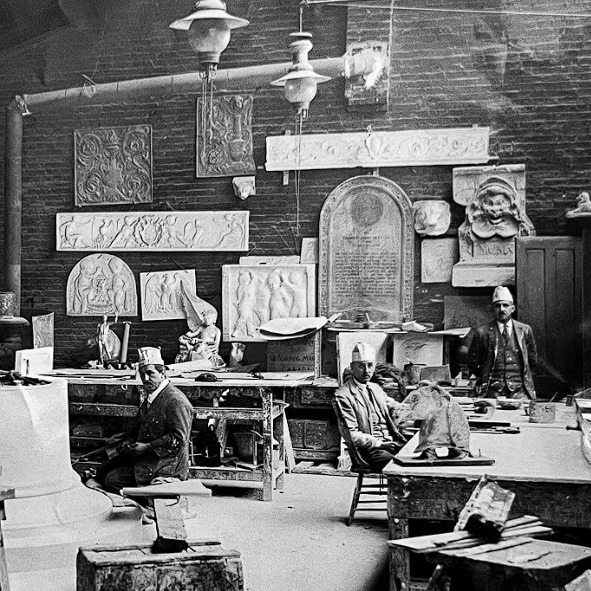
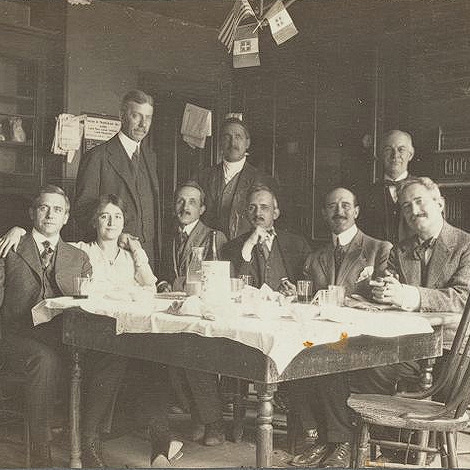
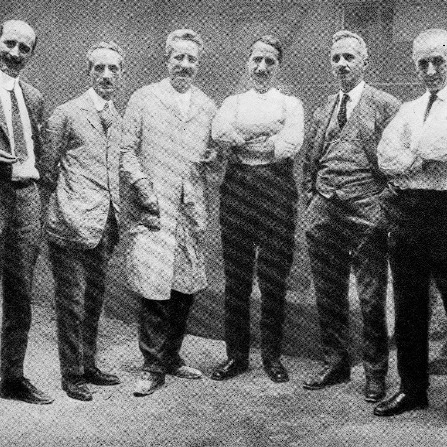
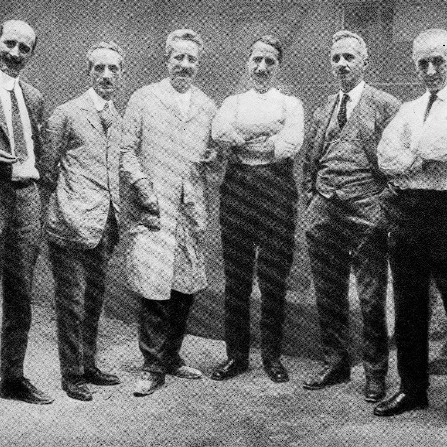
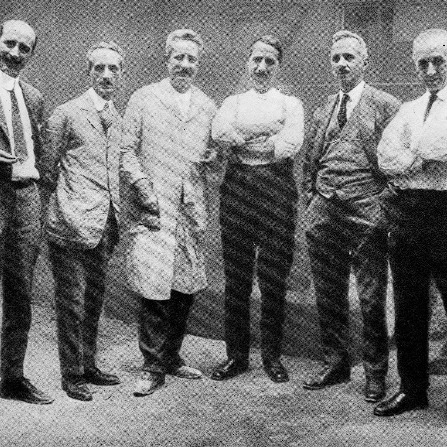
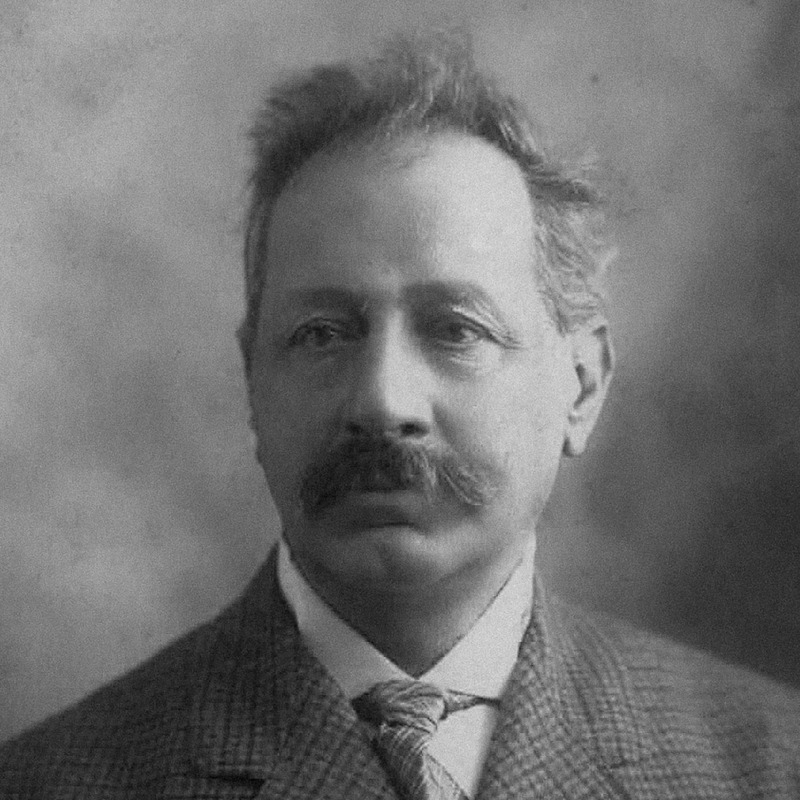
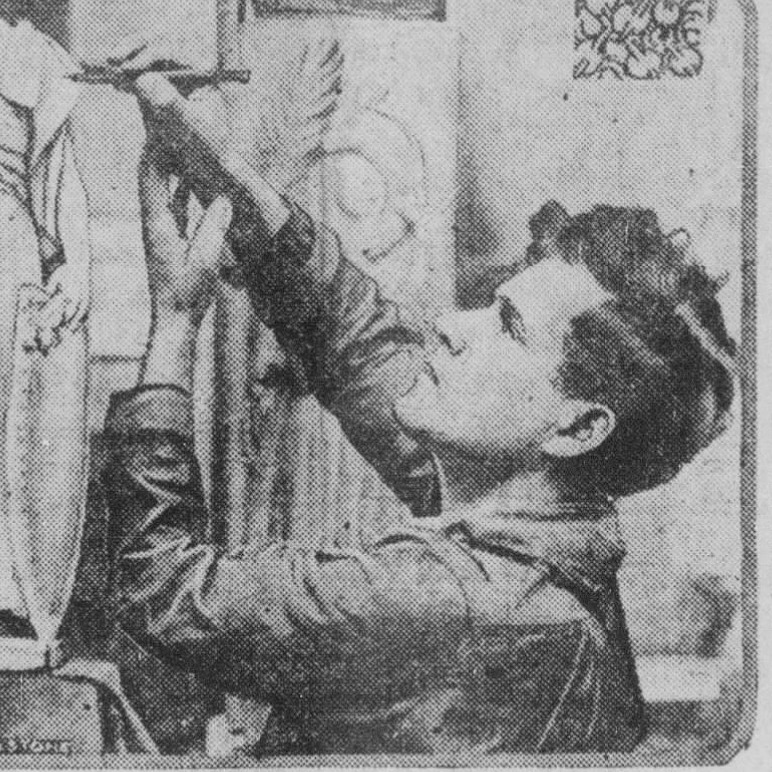
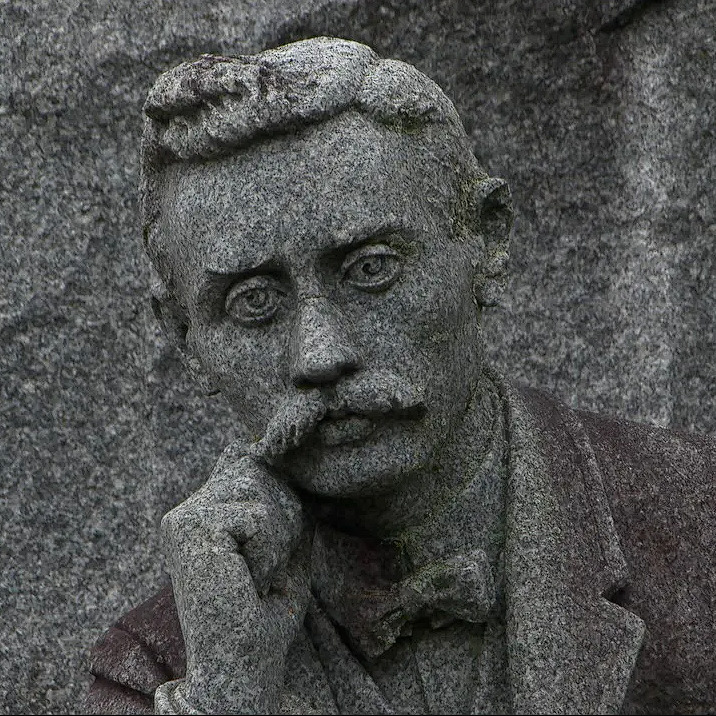
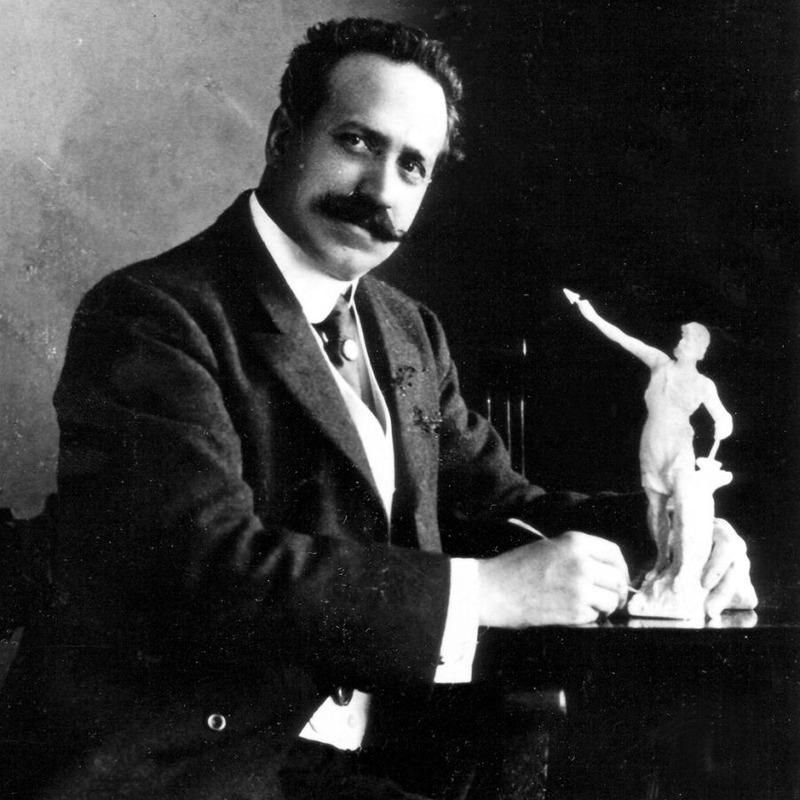
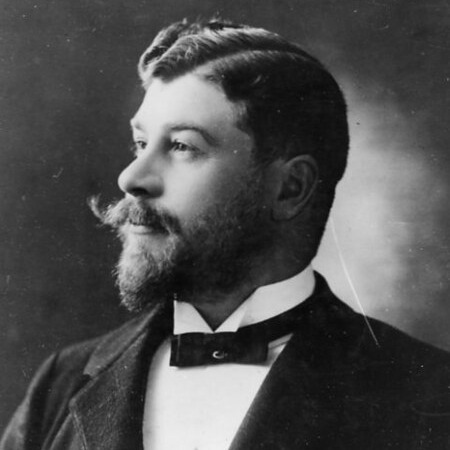
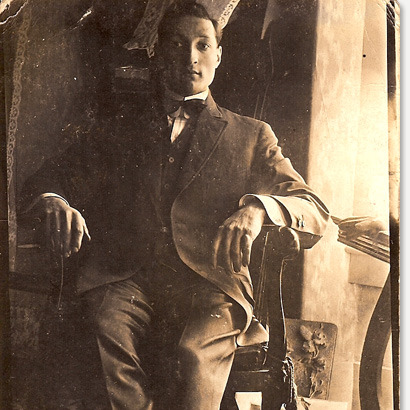
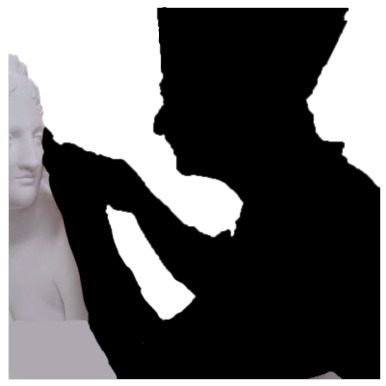
The streets and buildings of New York, and indeed much of the U.S., are decorated with the carvings of the Piccirilli brothers and thier father. Moving to the U.S. in 1888, the family opened a studio complex shortly after in the 1890s. Some of the most important buildings in New York hold work by the brothers, including the New York Stock Exchange and the New York Public Library. They are also famous for their work on the Lincoln Memorial in D.C. Famous architect and artist Daniel Chester French was well known for hiring the brothers to carve many of his famous designs.
Moved with his family in 1888 from Massa, Italy to New York, where the family is recognized as the sculptors of some of the most significant marble sculptures in the U.S. His sons are Attilio, Ferrucio, Furio, Getulio (Giulio), Masaniello, and Orazio and they were trained in marble cutting and carving as well.
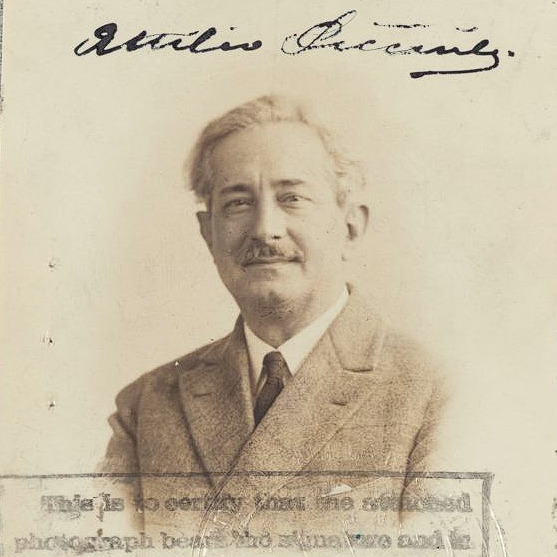
The most well-known Piccirilli brother. One of the two brothers who are known to have trained in Rome. Compared to the others, Attilio is credited with more solo works than the other brothers and worked on different projects around the U.S.
Considered the most creative of the brothers, Furio is one of the few brothers who returned to Italy and died there. Furio is also one of the two brothers who are known to have trained in Rome.
A possible pupil of Antonio Canova, Causici was contracted for work at the US Capitol but was unable to complete all the work he set out to do. He did complete the plaster of the Liberty of the Statuary Hall and two relief panels called "The Landing of the Pilgrims" and "Conflict Between Daniel Boone and the Indians." Causici claimed to have made the first bronze bust in the US, but there is no evidence to support this claim. Causici submitted the most attractive bid to build the Washington Monument in Baltimore, beating out artists like Antonio Capellano and Luigi Persico. It is believed he died of Cholera in Havana, Cuba.
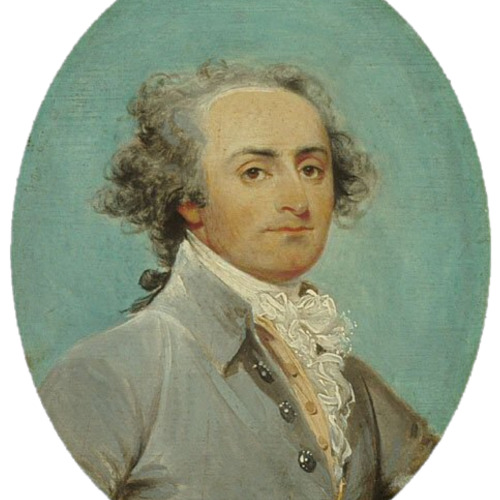
It is commonly rumored that Giuseppe "Joseph" Céracchi was born on the Island of Corsica; however, it is more likely he was born in Rome. He studied the Roman Neoclassical style at the Accademia di San Luca in Rome, where he was a student alongside Antonio Canova. Céracchi was a steadfast supporter of the revolutions in the United States and France. He arrived in the United States in 1791, with the intention of obtaining a commission for a monument depicting "American Liberty." While awaiting approval for the monument, Céracchi crafted several busts of American political figures. He did not secure the commission for his Liberty monument. Although he returned to America on several occasions thereafter, the political busts remain the most enduring aspect of his work in America. Later in life, Céracchi was convicted of conspiring to assassinate Napoleon Bonaparte in 1800, and he was subsequently executed by guillotine in 1801. Some sources have his execution date in 1802.
Giovanni Carlo "Charles" Micali worked with the Monumenti Sepolcrali della Toscana, which may be an association of Tuscany's funerary monument makers. It is unclear if his services were used in the building of the Capitol, but he was brought in to create the first monument in Washington D.C.
Born in Carrara, Italy, Francisco (or Francesco) Iradella emigrated to the United States with his cousin Carlo Franzoni in 1816. They arrived to assist in the reconstruction of the U.S. Capitol following its destruction in 1814. Iradella married the widow of his cousin, Giuseppe Franzoni, shortly after arriving in America. He was recruited to contribute to the Capitol's sculpture work due to his expertise in botanical sculpture. Throughout his career, he collaborated closely with Benjamin Henry Latrobe and Giovanni Andrei. Following Andrei's death in 1824, Iradella was appointed to oversee the sculpture work on the Capitol. He passed away shortly thereafter at the age of 37 in 1831 in Washington, D.C.
Lentelli's date of birth is listed as November 29, 1879 by the Smithsonian, but most other sources claim it as October 29. Artistically trained in Bologna and Rome, Italy, Lentelli moved to America in 1903 and later became a citizen. He taught in New York and San Francisco while working as a sculptor nationally. His statues were distributed across the country, including locations in D.C., Virginia, and California. He is renowned for his "Golden Sprays," a set of nude figures showcased at the 1939 New York World's Fair. His family and he returned to Rome in 1955, where he passed away seven years later.
Carlo Nicoli attended the Accademia di Belle Arti di Carrara, where he received numerous awards prior to his departure in 1864. Subsequently, he relocated to Florence to commence work under the mentorship of Giovanni Duprè. Nicoli is regarded as one of the more accomplished artists active in Florence during the mid-to-late nineteenth century. Nicoli opened a workshop in San Francesco, near Carrara, in 1876. He has limited work displayed in the U.S. His descendants still run his workshop today. He died in Carrara, Italy, in 1915.
Carlo Franzoni received his education at the Accademia di Belle Arti di Carrara, where he and his brother, Giuseppe Frazoni, were employed for a brief period. His brother moved to the United States in 1806 to work on the U.S. Capitol. Giuseppe passed away unexpectedly in 1815, a year after parts of his work at the Capitol, were destroyed in 1814 during the British Burning of Washington. His death prompted Carlo to relocate to Washington in 1816, with his cousin Francisco Iardella, to continue his brother's commissions and to pursue his own artistic pursuits. Regrettably, Carlo also passed away in D.C. unexpectedly in 1819 due to heart complications.
Another artist who studied at the Accademia di Belle Arti di Carrara, Giovanni Andrei, was renowned as an ornamental sculptor in Florence and Rome. In 1806, both Andrei and his Brother-in-Law, Giuseppe Franzoni, received invitations to the United States from Philip Mazzei, at the behest of Benjamin H. Latrobe, to contribute to the construction of the United States Capitol. During a period of concern regarding the funding for his work, Andrei also undertook projects around Washington and Baltimore. He returned to Italy in 1815 to work on recreating capitals for the US House of Representatives' chamber of the Capitol that were destroyed during the War of 1812. He returned to the US where he died in 1824.
Giuseppe Franzoni trained in sculpture with his brother, Carlo Franzoni, at the Accademia di Belle Arti di Carrara. In his youth he worked around Florence, with upkeep efforts of major sites. In 1806, he emigrated to the United States, accompanied by his brother-in-law, Giovanni Andrei, at the invitation of Philip Mazzi to assist Benjamin H. Latrobe in the construction of the U.S. Capitol. Regrettably, a portion of his work was lost in the destruction of the Capitol in 1814 during the British Burning of Washington, and he was unable to complete its recreation due to his unexpected death a year later.
Francesco Lazzarini was born in Carrara, Italy and studied in Rome. Little is known of Lazzarini's life, but his art is well-regarded and was held in many incredible collections, including those of Peter I of Russia.
Raised in New York, Novelli returned to Italy in 1903 to study art in Rome. He returned to the U.S. where finished much of his personal work in the 1920s before the depression. Novelli mostly worked in bronze. Novelli took his own life in 1940.
A dedicated socialist, Corti advocated for workers' rights and economic equality, aligning himself with the radical labor unions of the early 20th century. He moved to Barre, Vermont, a major location for sculptors in early American history. He was killed in 1903 during a small, politically driven fight.
After showing skill at carving at a young age, Giuseppe Moretti studied in Florence. Arriving in the US in 1888, he worked all over the East Coast while keeping a studio in Florence, Italy. He eventually moved to Alabama after discovering the outstanding quality of its marble. His purchase of a quarry in Alabama was in part to challenge the import of Italian marble.
Tommaso Gagliardi was apprenticed to the sculptor Pietro Tenerani, a pupil of Antonio Canova, and was briefly employed by Thomas Crawford in Italy. Gagliardi immigrated to the United States for political reasons, arriving in 1855. He found employment for three years carving statuary designed by Crawford for the Senate wing. He was a friend of the Piccirilli brothers. Prior to 1862, Gagliardi experienced an ailment in his shoulder that threatened to end his career; however, he reported that medical treatment in Vermont restored his ability to use his arm.
Gaetano Trentanove was born and trained in sculpting in his home city of Florence, Italy. After a successful early career in Italy and selling the marble statue The Last of the Spartans to William E. Cramer, Trenanove moved to Milwaukee, Wisconsin. He worked on projects across America, including in the U.S. Capitol. He became an American citizen and worked with both stone and bronze. He continued to visit Florence to work on his projects yearly. After retiring from the arts, he moved back to his beloved birth home where he would pass on.
Luigi del Bianco began working for Gutzon Borglum, the head carver of Mount Rushmore, in 1933. Bianco was to carve detail in the faces of the Presidents at Mount Rushmore National Memorial. He worked specifically with Lincoln's eyes and a crack in Jefferson's lip. Recognized for his crucial role in 2017. Also worked on Borglum's Stone Mountain and Wars of America.
A pupil of Antonio Canova, Antonio Capellano is said to have been so enraptured with his art that his wife claimed he would "turn to stone himself." He is credited as a sculptor of the court of Spain. Capellano was one of the numerous Italians invited by Benjamin Henry Latrobe to contribute to the decoration of the United States Capitol. He is recognized as one of the craftsmen responsible for numerous architectural elements and statutory projects in Washington D.C. after 1814. After amassing wealth in America, he returned to Italy to spend the remainder of his life in Florence.